
Train A Calmer Dog
Shaping confident dogs and empowered owners through scientific, balanced & relationship-based training.
To bridge the gap between dogs and the humans who love them — through a methodology grounded in science, refined through casework, always growing and learning, and delivered with consistency — so that more dogs can live regulated, trusting, and engaged lives in their homes and communities.
Training that meets your dog where they are
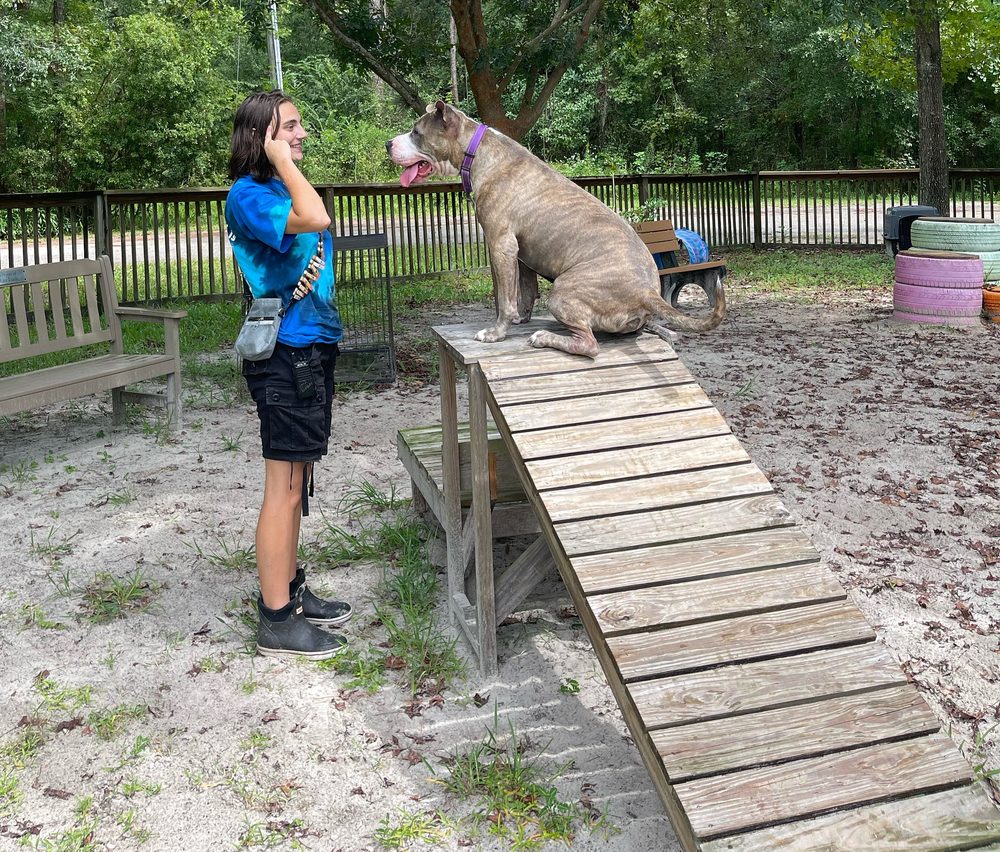
Whether your dog lives and learns with me for two weeks, works with me in your home, or joins a class in the field, the goal is the same: a calmer, more confident dog and an owner who understands why it works.
What families say
“We adopted from a shelter in Clay in 2024. Not only did Grace assist in ‘matching’ us to a dog she had lots of knowledge on, she helped us navigate the struggles when we brought him home.”
“He had a hard time on leash, and around new people. Grace taught us how to safely introduce him to new people, helped us build his confidence, and communicate in a way that it wasn’t so difficult to manage. He’s still improving but wouldn’t be where he is without her. You can really tell how much she cares about making a difference in the dogs’ lives.”
“Hiring Grace when we brought home our Australian Shepherd was one of the best decisions we made. The training gave us so much more than just a well behaved dog — it gave us the tools and confidence to communicate with him and build good habits from the start.”
“The biggest proof of how valuable that training was came when we added our newest puppy to the family. Because our Australian Shepherd had such a strong foundation, he actually helped teach our puppy appropriate behavior. Potty training, manners, and everyday routines were so much easier than we expected.”
“The training was practical, easy to apply in real life, and has continued to benefit us years later. We are incredibly grateful and would highly recommend Grace to anyone looking for a trainer who sets both dogs and owners up for long-term success.”
“We got a new puppy recently. The amount of education Grace provides in obedience but also helping him thrive in the world is amazing. We work a lot, and live in a busy area. Grace has helped us create a plan as we grow that we understand that fits Milo’s needs.”
“I hired Grace to help me train my French Bulldog puppy Hucksley and continue training with Madden and Tavi, her previous clients. Not only did she help me redirect Madden’s anxious whining and Tavi’s anxious licking but she helped me give structure with crate training, understanding how dogs learn, helping me understand my dogs’ body language and how they were communicating and how to help them communicate better.”
“She’s helped me so much in having a better and more productive relationship with my dogs. Huck is doing great with obedience, we are working on an off switch currently.”
“We adopted Copper from Safe Animal Shelter in 2023 and we suspected he had been physically attacked by people and other dogs. He was terrified of his surroundings, other people and dogs. He would pace around constantly and would jump at everything.”
“Grace came to see us and was so incredibly helpful with educating us on how to train a nervous/abused dog. She started out with helping Copper become confident in meeting new people and putting on his harness with gentle reassurance and treats. Being calm and slow was a must for Copper and even though he was nervous with strangers, Grace’s calm presence helped him learn that he could do new things without fear.”
“The tactics Grace taught us helped so much in the long run. Copper now goes on walks without trying to run away, without shying at people and dogs, and we notice him sniffing a lot which is one of the tricks Grace taught him to calm himself down.”
“A trainer like Grace who will be patient and calm with a dog is so essential for a dog coming from a shelter, especially with a past of abuse. If Grace does such a wonderful job with a dog who needs so much patience and reassurance, she will do an amazing job with any dog she teaches! We can’t recommend her enough!”
“We adopted from Clay animal shelter. We never went in though, we found the perfect dog online in a foster home who happened to be Grace. Grace explained the condition he was in mentally before we got him, that he was extremely under socialized, and was terrified of the world around him to the point he would only run places or army crawl, and pooped/peed when you touched him.”
“She explained that while his people skills were growing he would be a project. She also explained how he did with other dogs and it was exactly what we wanted for our pack. We saw videos of how he opened up with her, getting a personality, showing interest and looking to her for what to do next and seem happier around her, so we knew he would come around he just hadn’t had the time yet.”
“We got Fig and she helped us learn how to integrate him into our home, build his confidence, and make things in life more accessible by treating his fear. She is always there for the next step when we need it. It’s been a journey and it is still ongoing, but he is the sweetest boy. We don’t know what life would be like without Fig, and Grace for helping us create the perfect family.”
Staff access
Sign in to open the manager.